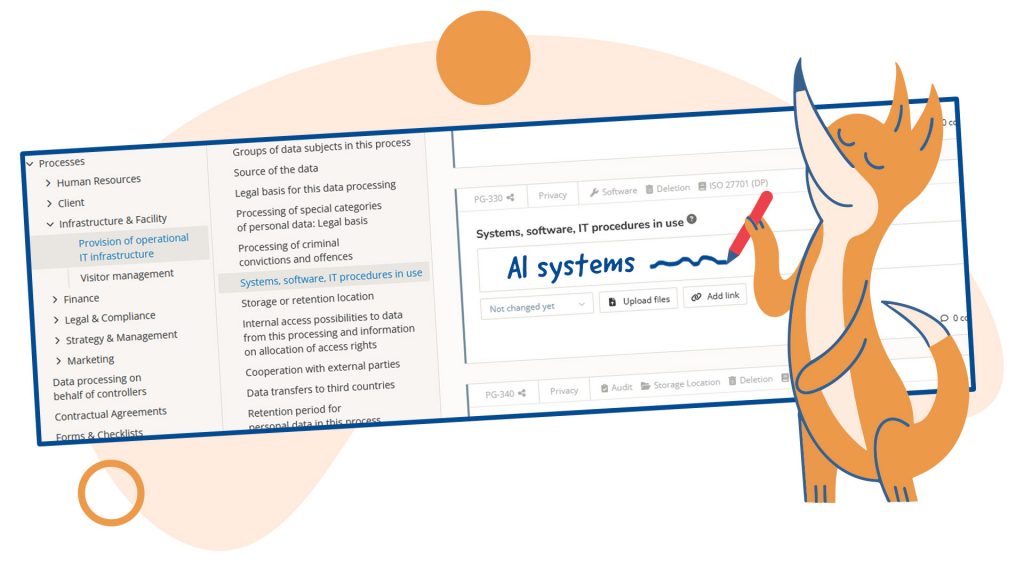
Teaser for documenting AI in foxondo

ChatGPT, DeepL, and friends in foxondo: How to document AI software in existing IT processes.

Everyone is talking about artificial intelligence, but in data protection documentation there is a lot of uncertainty around its usage. With foxondo, the solution is simple, and you do not need to reinvent the wheel. Today we will show you how to integrate AI applications into your existing IT infrastructure and processes while staying compliant with all privacy requirements – from DPAs to third country transfers.
Teaser for changes in cooperation with external parties

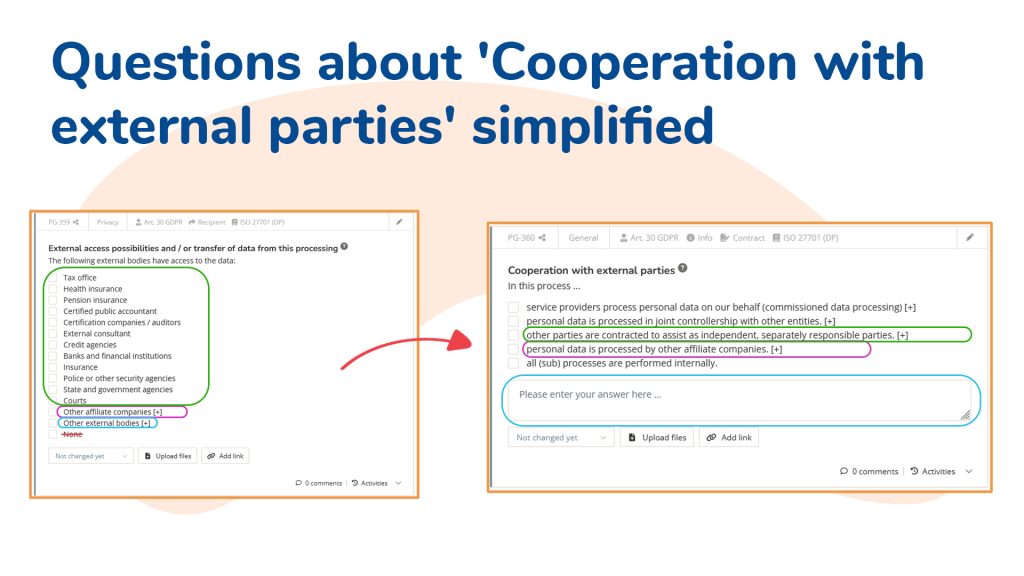
Cooperation with external parties is now easier to document

In foxondo, we have combined two questions in the processes relating to external access options and cooperation with other organizations. This makes documenting cooperation with external parties easier and clearer for you – and eliminates redundant information. Here you can find out what has changed and why this is beneficial for your documentation.

Teaser for a new question

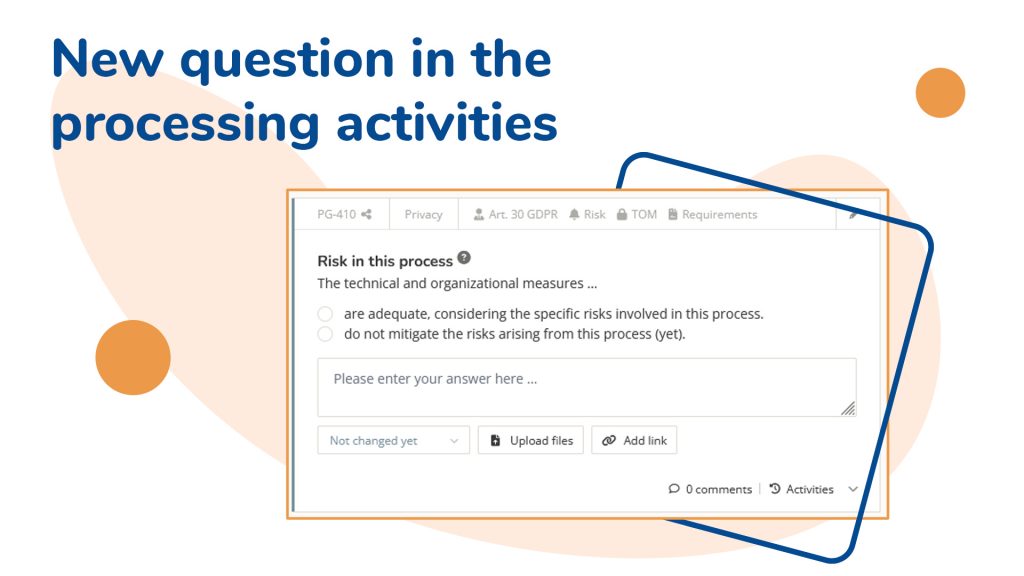
New question in the module “Processes”

There is a new question regarding protection of data: Whether the technical and organizational measures (TOMs) taken are suited to protect the personal data in the process adequately. The new question replaces previous questions on additional TOMs and pseudonymization. Of course, we have already transferred the content of these questions for you.

Teaser Data processing on behalf of controllers

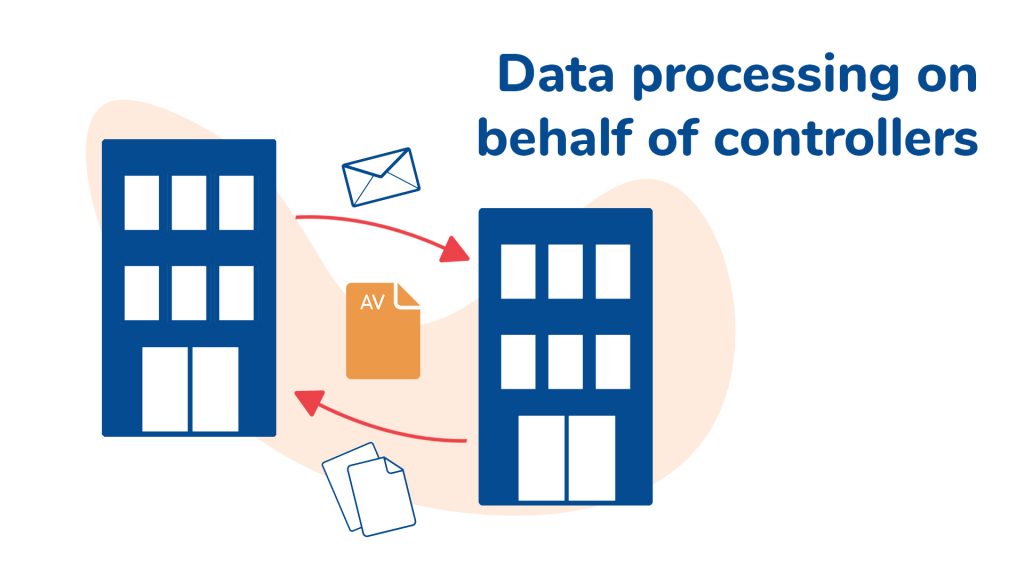
Update for processors

Is your company a data processor, i.e. does it provide services on behalf of other companies? In addition to documenting your own internal processes, you must also document the processes you provide to other companies, insofar as personal data is processed.

Teaser Data Transfers to the USA

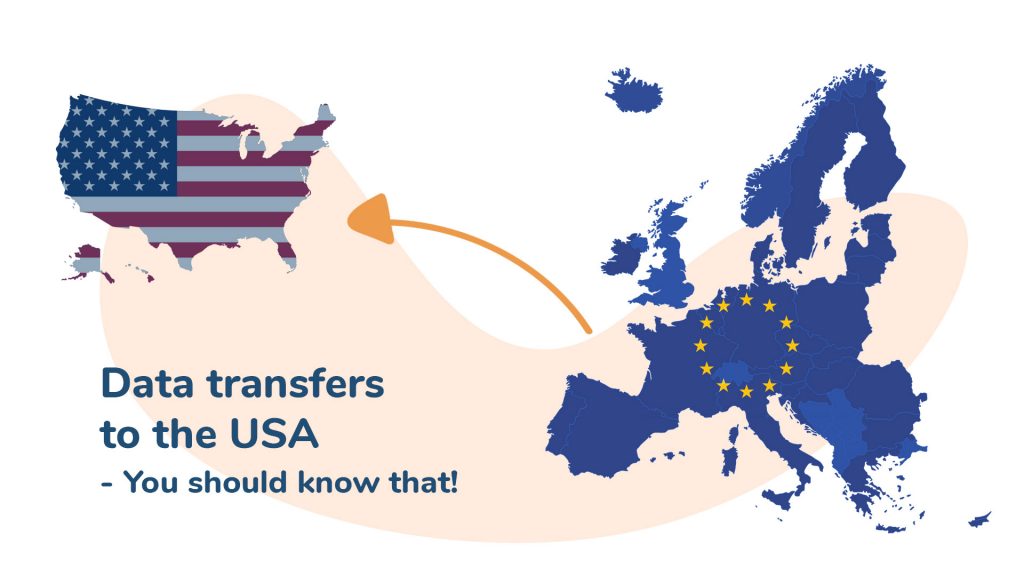
Will the EU-U.S. Data Privacy Framework soon be cancelled?

The Trans-Atlantic Data Privacy Framework (TADPF) is a legal basis for data transfers to the USA. US President Trump is currently having numerous executive orders from his predecessor reviewed, including those on which the EU-U.S. Data Privacy Framework (TADPF) is largely based. What should you do now?